The camp itself
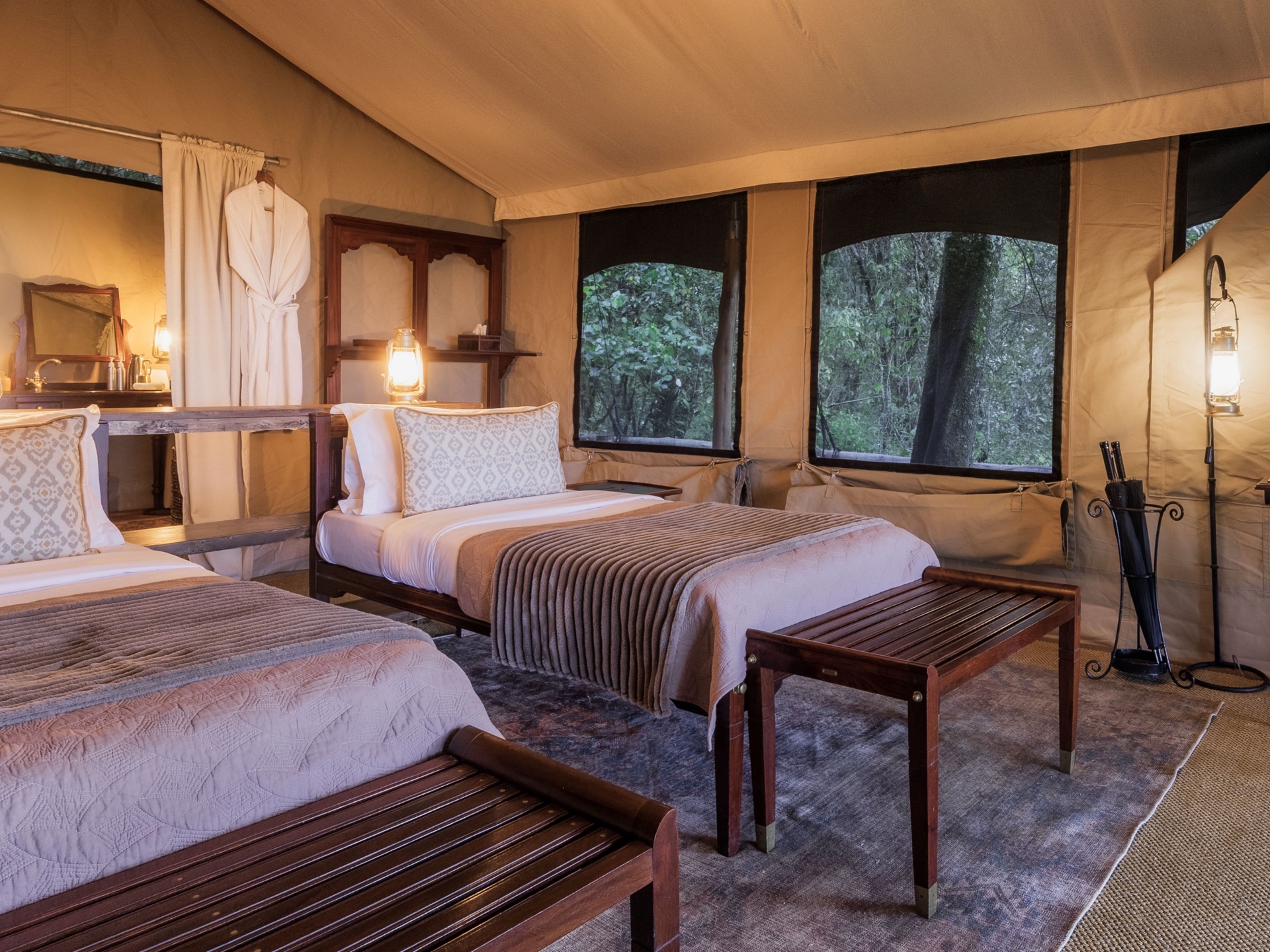
The photographs never show the other eleven guests
An empty bed, a freestanding bath, a view from a deck. Every camp in this market is shot the same way, and none of it answers the question a couple actually has: how much of this fortnight will we spend with strangers?
The counter-intuitive bit
Smaller is not always more private
A six-tent camp with one hosted dinner table is far less private than a twenty-room lodge with separate tables. Everybody knows everybody by day two, dinner is a group event, and skipping it takes explaining.
Which is not an argument against small camps, they are usually the better experience, but it does mean that "intimate" on a website is not the same word as "private", and that the two are worth deciding between rather than assuming they come together.
- Seven to ten tents is the usual sweet spot
- One communal table changes every evening of the fortnight
- Separate tables, plus private dinners on request, is what to look for
- Ask how many nights they will serve on your deck
The five variables
What actually decides it
None of these appears in a photograph, and all of them change the fortnight.
Meals
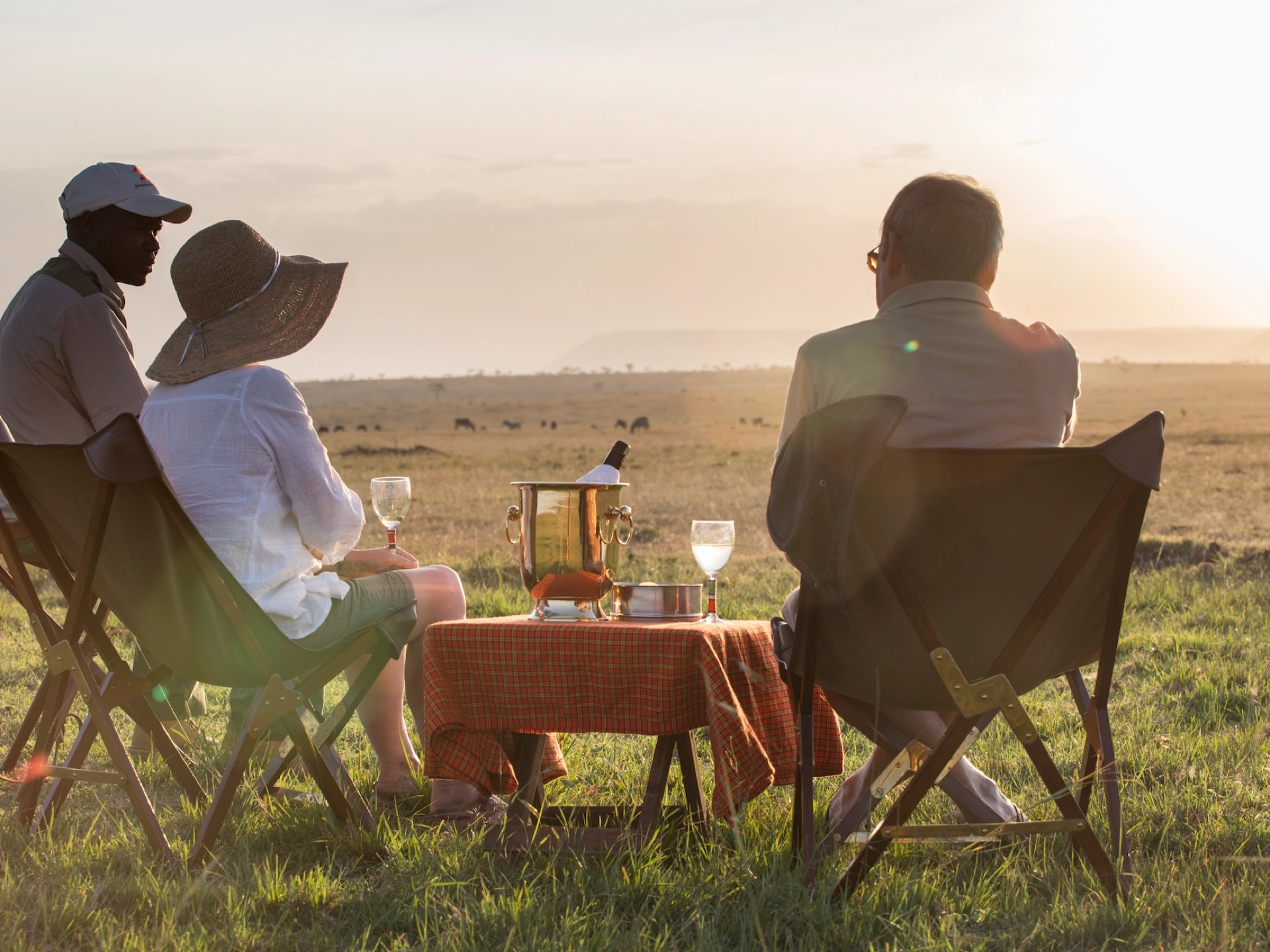
One communal table or separate ones. The single biggest variable for a couple, and it is almost never on the website.
The dinner question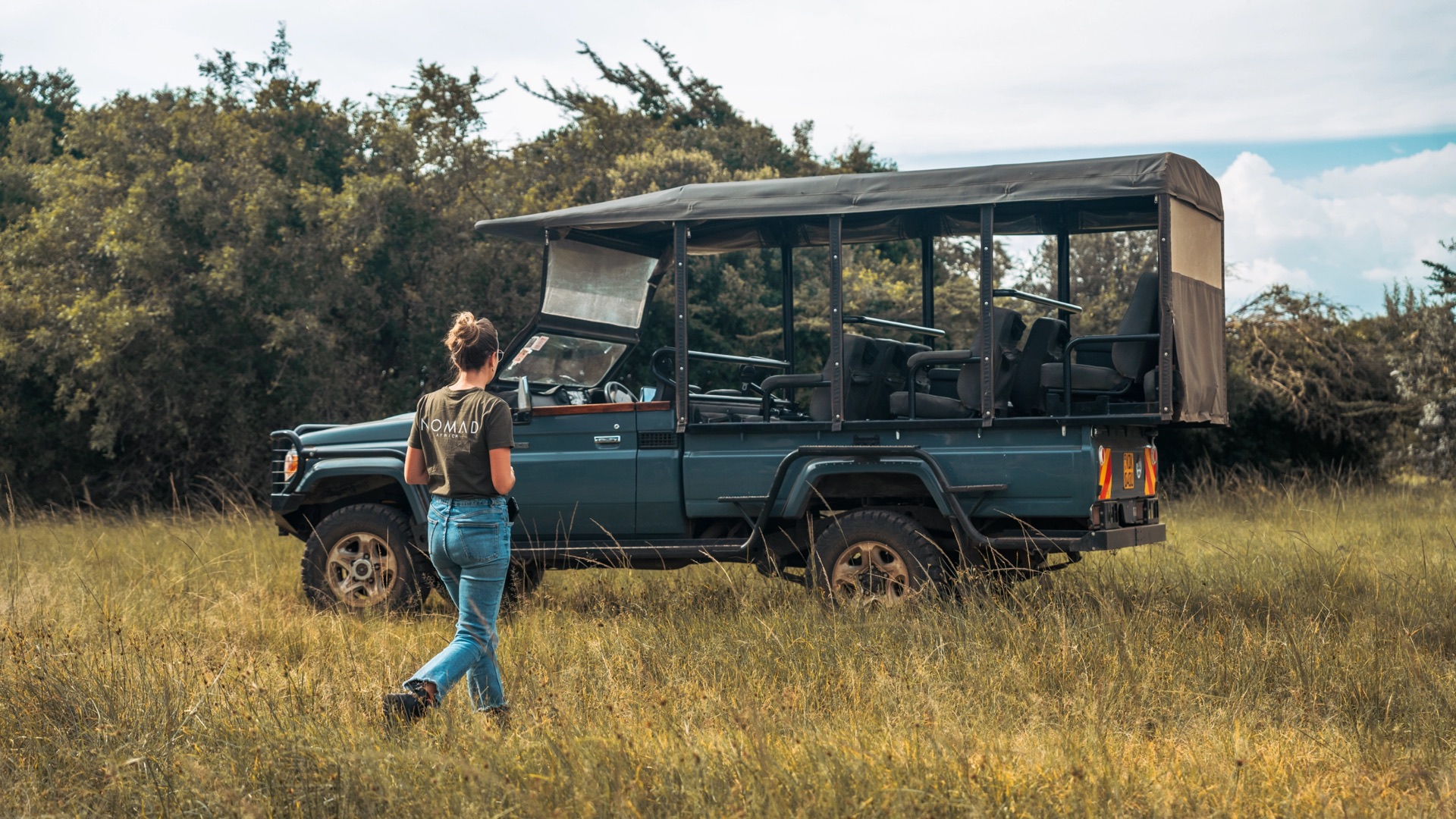
The vehicle
Shared means four to six people on one schedule, and it makes skipping a morning socially awkward rather than simply a decision.
What private means
Sound
Canvas is not a wall, and it cuts both ways. Spacing, staggering and planting between tents are real questions.
The canvas problem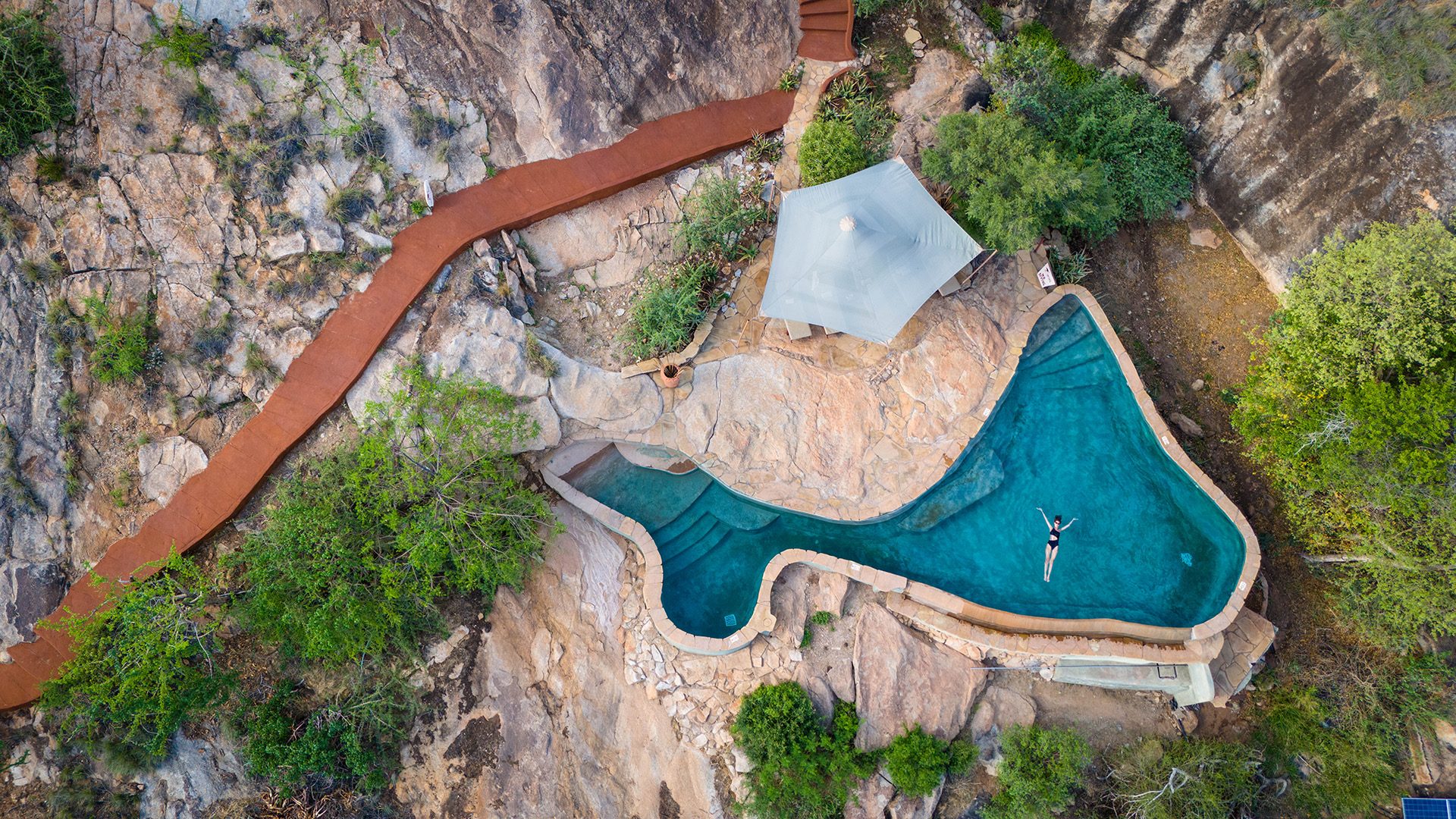
Sightlines
The most photographed and least interrogated feature in the market is the private plunge pool. Ask what overlooks it.
The pool question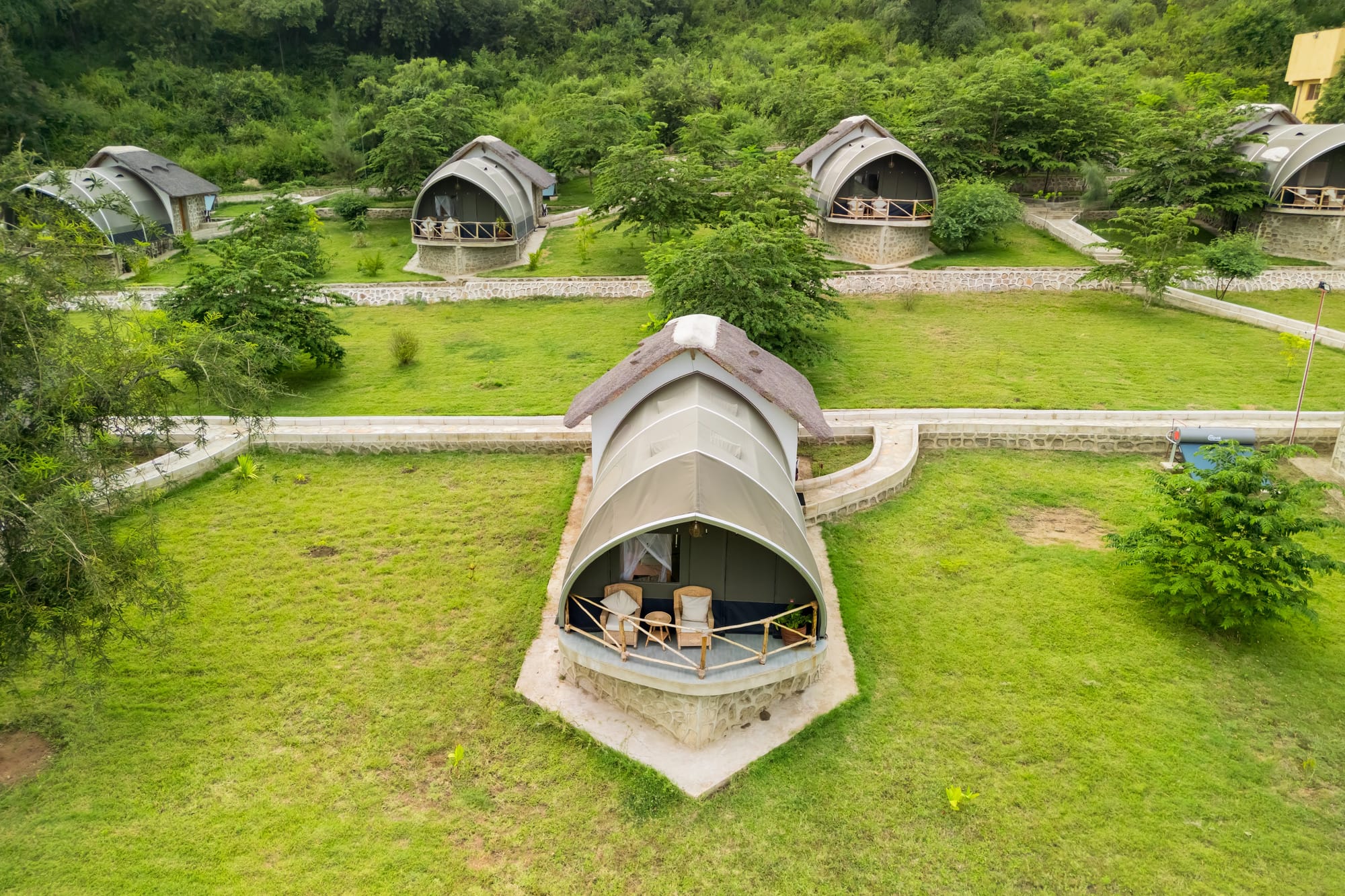
Layout
Where your tent sits relative to everything else, whether you can walk to it unescorted, and where the staff route runs.
Reading a camp plan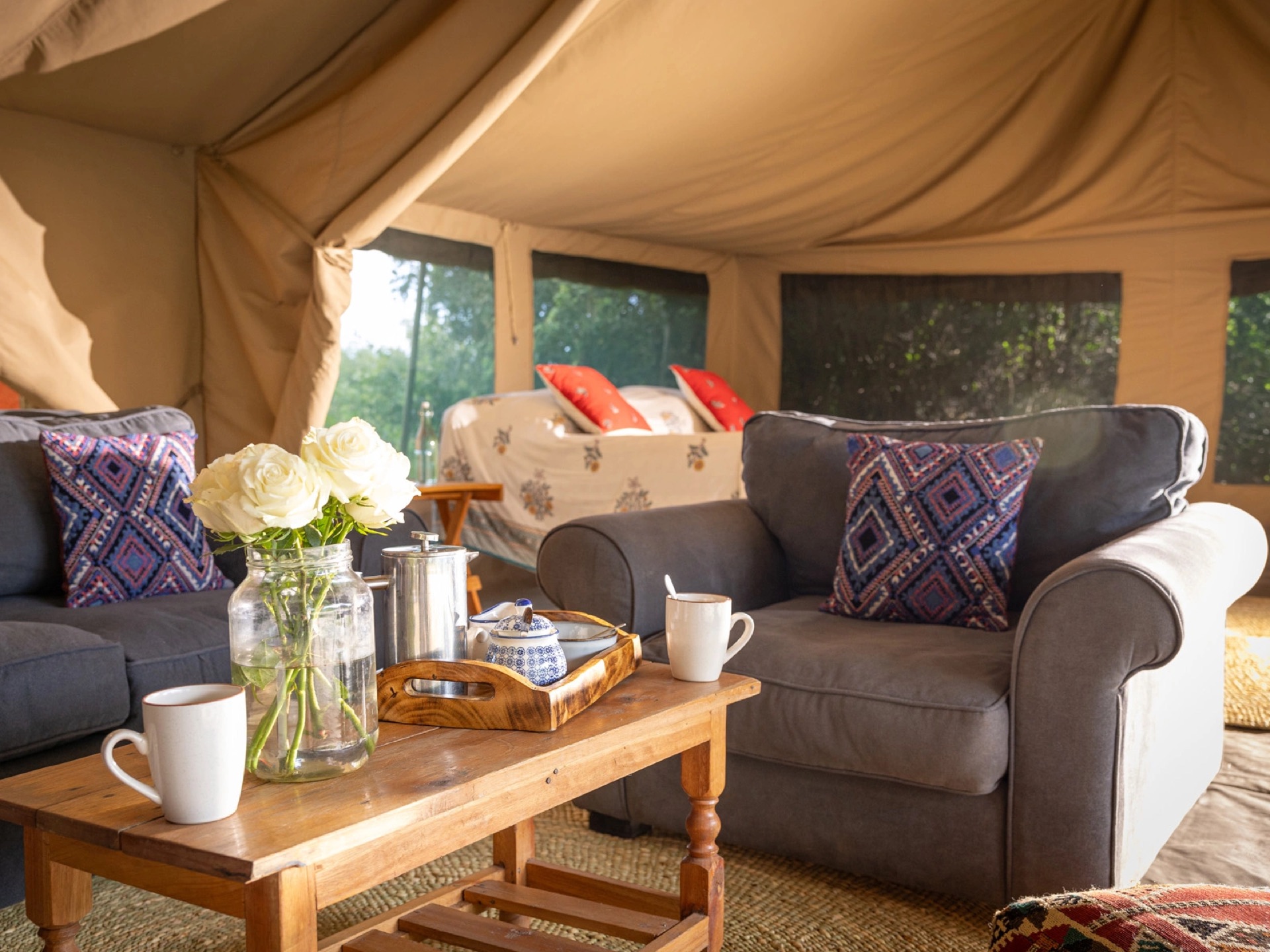
The twenty questions
The whole list, in the order worth asking them, and who to ask, which is not the camp.
The questionsFree download
The Honeymoon Camp Checklist
Twenty specific, checkable questions about a camp that no brochure answers and every one of which changes the fortnight.
- Why the photographs are useless
- Size: what tent count actually predicts
- Meals: the single biggest variable for a couple
- Vehicles: shared, private, and what "private" means
- Sound: canvas is not a wall
- Sightlines: the plunge pool question
- Layout: where your tent sits relative to everything else
- Staff: presence, and the difference between attentive and constant
- The twenty questions
- How to ask them without sounding difficult
No cost, no obligation. We ask for an email so we can send it and, if you want it, follow up once.
Size
What tent count predicts
The most useful single number, and it predicts more than it looks like it should.
| Tents | What it usually means |
|---|---|
| 4–6 | Almost family-scale. Everybody knows everybody by day two: wonderful if the other guests are good. |
| 7–10 | The sweet spot for most couples. Enough people for interest, few enough to disappear from. |
| 11–20 | A small lodge. Faces you recognise, no obligation to engage, communal dining unlikely. |
| 20+ | A hotel in the bush. Real privacy from other guests, at the cost of the camp feeling like a camp. |
Before you ask
The questions this raises
How many tents should we look for?
Seven to ten suits most couples: enough other people that the evenings are interesting if you want them to be, few enough that you can disappear.
But the number matters less than the dining arrangement. A six-tent camp with one hosted table is a group holiday; a sixteen-room lodge with separate tables is not.
Is a "honeymoon suite" worth paying for?
Sometimes, and for a specific reason rather than a romantic one: at most camps it is the tent furthest from the main area, which buys you quiet and a walk rather than a larger bathroom.
Ask where it sits on the camp plan. If the answer is "next to the dining deck because it has the best view", it is worth less than the name suggests.
What does "private vehicle" actually mean?
It varies, and it is worth pinning down. At some camps it means a vehicle and guide dedicated to you for the stay. At others it means you will not be joined unless the camp fills up.
Ask whether it is guaranteed or best-efforts, and what happens if the camp is full.
Will the camp do something for our honeymoon?
Most will, and the good ones keep it understated, a private dinner somewhere, a bush breakfast, the room set up when you arrive. Tell us at the enquiry stage so they know before you land.
We will not promise a specific gesture from a specific camp. They are goodwill rather than a contracted inclusion, and guaranteeing them would be guaranteeing something we do not control.
Who actually arranges my safari?
This site is a planning guide. When you send an enquiry it goes to Nomad Africa, our partner travel agency in Kenya, who prepare your itinerary and quote and handle the booking, the payments and you on the ground.
You deal with one team from the first email to the airport transfer home.
Start planning
Tell us how private you want the days to be
That answer, plus your dates, narrows the camp list faster than anything else you could tell us. "We would rather not eat with other people every night" is a real and useful brief.
Our Africa specialist replies within 24 hours with named camps and how many rooms each one has.
- Named camps, with tent counts and dining arrangements
- A private vehicle priced separately, so you can see the trade
- An honest word on which camps host communally
- No deposit to see a plan, and no obligation at any point
Who answers
Nomad Africa, our partner travel agency in Nairobi, builds and prices every itinerary we send. You deal with one team, on the ground, for the whole trip.
Founded in 2017 as East Africa’s only dedicated travel magazine, Nomad still publishes, so the people planning your trip are the ones who write about these places for a living.
Get your tailored itinerary and quote
Our Africa specialist replies within 24 hours with a costed plan built around your dates.
More from our Africa guides
Specialist guides across our Africa network
Each of these is a focused guide we publish. Same Africa specialist behind every enquiry.
Indicative 2026/27 rates. Your quote confirms exact pricing for your dates.